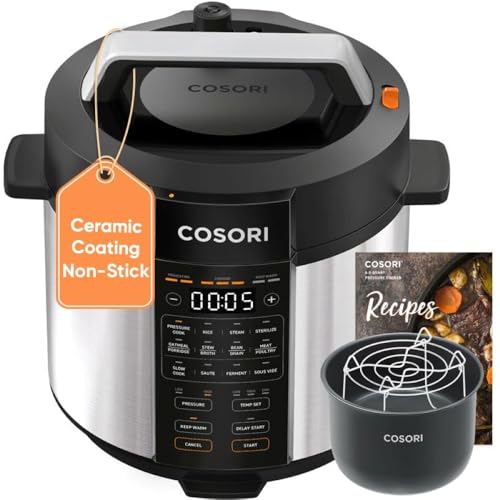
Pressure cookers save time, but the category is full of confusing model names and recycled recommendations. We rank Instant Pot models, pressure cookers, air fryer combos, and beginner-friendly picks based on what buyers actually need, not what looks best on a product page.
Read the Buyer's GuideThe pages below cover the highest-value buying decisions in this category.
Duo, Pro, Ultra, and Pro Plus ranked by actual use case, price, and buyer value.
Instant Pot vs Ninja Foodi vs other electric pressure cookers that still deserve consideration.
If you want one machine to pressure cook and crisp, this is the category that matters.
Some buyers should skip pressure cooking entirely and just buy the right slow cooker.
The comparison most buyers actually care about before they spend their first hundred dollars.
New to pressure cooking? This page cuts the decision down to what matters first.
3-quart, 6-quart, or 8-quart changes everything. Too small and dinner gets annoying. Too big and weeknight cooking feels wasteful.
Most people do not need 15 cooking programs. The right core functions matter more than feature overload.
Steam release design, lid handling, and interface quality matter more than spec-sheet fluff once you use it every week.
The best model is not always the most expensive one. Some upgrades are worth paying for. Some clearly are not.
For most people, the classic Instant Pot Duo remains the value benchmark. It covers the core use case, avoids feature bloat, and has the review history to justify trust. The Pro is the upgrade if you want better controls and a more refined experience. The rest of the category only makes sense if you have a specific reason to move beyond those two.
That is the pattern we follow across this site: start with the real use case, not the most expensive model. It sounds obvious, but most review sites do the opposite.
The key factors are fit, build quality, and how the product will be used day to day. Buyers usually get in trouble when they chase the cheapest option without checking capacity, materials, or installation requirements. The right pick is the one that matches your actual use instead of the one with the flashiest bullet points.
Sometimes, yes. Higher-end options usually justify the price with better hardware, sturdier materials, smoother operation, or longer lifespan. If the product will be used heavily or left installed for years, spending more up front is usually cheaper than replacing a weak option later.
Start by measuring or confirming compatibility before looking at brands. Then compare the specific tradeoffs that matter for this category, like capacity, installation time, daily convenience, and warranty support. Most bad purchases happen when buyers pick off reviews alone without matching the product to their actual setup.
The most common mistake is buying for the spec sheet instead of real-world use. Bigger, heavier, or more feature-packed does not automatically mean better. A product that fits your space, routine, and budget correctly will outperform an βupgradedβ option that creates friction every time you use it.
That depends on materials, environment, and how hard they are used, but quality options in this category should hold up for years rather than months. Proper installation and occasional maintenance matter just as much as brand name. If something wears out unusually fast, poor fit or cheap hardware is usually the culprit.